
What conservation clearing is
On most properties the problem is not the trees. It is what has grown up under and around them: privet, sweetgum thickets, smilax, wax myrtle, vines climbing into the canopy. Conservation clearing takes that growth down to a mulch layer while the mature pines, oaks and other keep-trees stand where they are.
The approach is the one RRE brings to every job. Understand the property and the features to preserve. Agree the scope, boundaries and intended finish. Then carry out the clearing with the surrounding land in mind. On conservation ground, the first step carries the most weight.
Before and after
Drag the handle to compare.
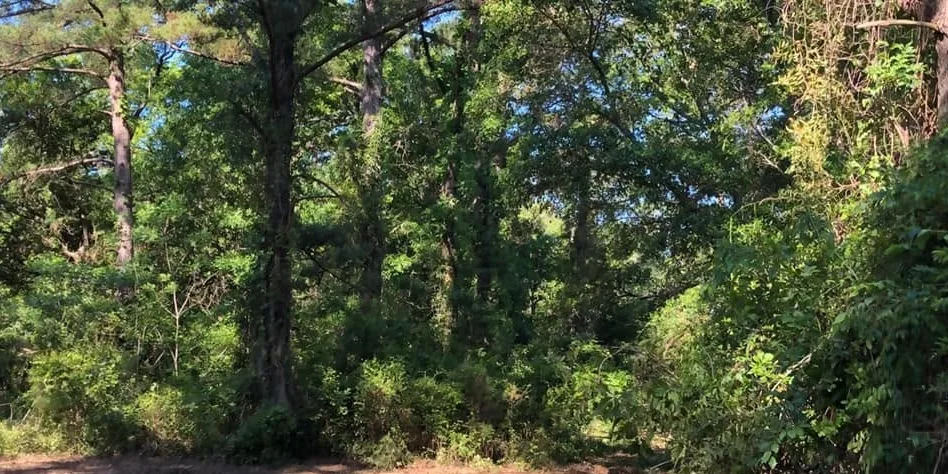
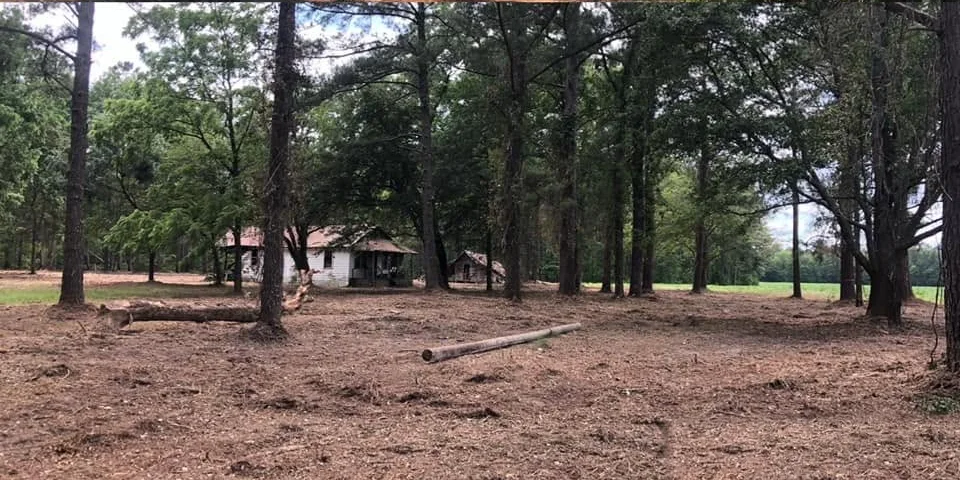 BeforeAfter
Opening up wooded land while keeping the established trees.
Why mulching is the lower-impact choice
Forestry mulching grinds vegetation where it stands. For sensitive ground, that matters in three ways.
- No burn piles. Nothing is stacked and burned, so there is no smoke, no scorched ground and no fire to manage. RRE builds and maintains firebreaks but does not conduct burns, obtain burn permits for clients or act as burn manager.
- No hauling. Nothing leaves the property: no truck loads, no dump trailer, no staging area to repair afterwards.
- A mulch cover. The ground is left under chips rather than bare soil, which slows erosion while native ground cover comes back.
Mulching suits brush, vines, saplings and small trees, up to a size judged at the site visit. Larger trees are kept, or felled first by a logger. Stumps are ground or grubbed as a separate step.
The keep list: deciding what stays
Every property has something worth keeping. On conservation ground the list is usually long, so we build it before anything else is decided. A keep list is the trees, patches and features the work will leave alone. It often includes:
- Mature hardwoods and pines, including any specimen or protected trees your county regulates
- Snags (standing dead trees) and cavity trees that wildlife is using
- Wetland edges, creek banks and the buffers around them
- Native ground cover you want to encourage, such as wiregrass
- Thickets and edge left as nesting cover or screening
We walk the property with you and agree what stays. The keep list is agreed first, flagged on the ground and written into the scope. Only then do we choose the approach: a full pass in one area, a lighter pass in another, a wider margin around a keep-tree. If a county tree ordinance applies to your parcel, check it before scheduling. Permits, buffers, tree-protection compliance and protected-species compliance are the landowner's responsibility. RRE stops work when it finds a burrow, cavity tree, grave or other protected feature. [FPO: RRE policy on checking local tree ordinances with the owner — VAL-041]
Easements and landowner programs
If your land is under a conservation easement, the holder usually has a say in vegetation work. Read the terms, or ask, before you schedule clearing. RRE can scope the work to what the easement allows, but easement terms and the approval are yours to secure.
USDA NRCS offers cost-share and technical assistance programs, such as EQIP, that can support conservation practices on private land, including brush management and habitat work. [FPO: cite exact page + access date — SRC-014] Eligibility, practice standards and payment rates are set by NRCS, not by RRE. RRE is a contractor, not a program provider, and cannot tell you whether a practice will qualify. Your local NRCS office or a consulting forester can.
Where quail habitat is the goal, the model is open pine with a grassy understory (the ground layer under the canopy). Hardwoods creeping in and dense brush work against it. Tall Timbers publishes the standard guidance. [FPO: cite exact page + access date — SRC-013] Clearing is one part of that picture. Thinning and fire come from other hands.
What past projects show
RRE's understory-clearing project shows the result on timbered ground: dense understory before, a mulched open area beneath the mature trees after. [FPO: location, date and acreage for the understory-clearing photo pair — DEP-28]
This page is reviewed by a forestry subject-matter expert. [FPO: SME reviewer name and credential — DEP-30]
Talk through your ground
Tell us what you manage the land for, what has to stay and what is in the way. Send the town or county, approximate acreage, photos and your preferred timing to hello@rreforestry.com, or request a consultation.
Frequently asked questions
Can you clear around a wetland or creek?
Yes, up to the boundary you and the regulators set. Wetlands and buffers are regulated separately from ordinary clearing, so confirm the line with your county and, where it applies, the state or federal agency before work starts.
Can RRE help me get NRCS funding?
No. We can describe the work and provide an estimate for your application. Eligibility and approval sit with NRCS.
Do you treat regrowth with herbicide?
No. RRE's work is mechanical. Where invasives are involved, a licensed applicator handles chemical follow-up. The invasive growth management page explains how the two fit together.