
What forestry mulching is
A mulching head on a tracked carrier grinds standing vegetation where it stands. Brush, vines and saplings go through the head and come out as chips and shredded fiber spread over the ground. The trees you want to keep stay where they are. The soil stays covered. When the machine leaves, the area is open and ready to walk, mow or plan around.
That is the whole service. It does not move soil or pull roots. For a plain-language explanation of the method, read What is forestry mulching?.
Before and after
Drag the handle to compare.
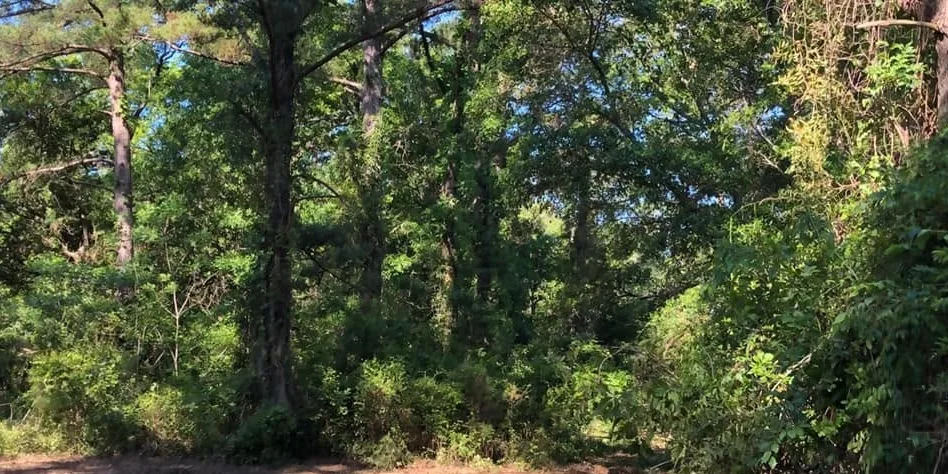
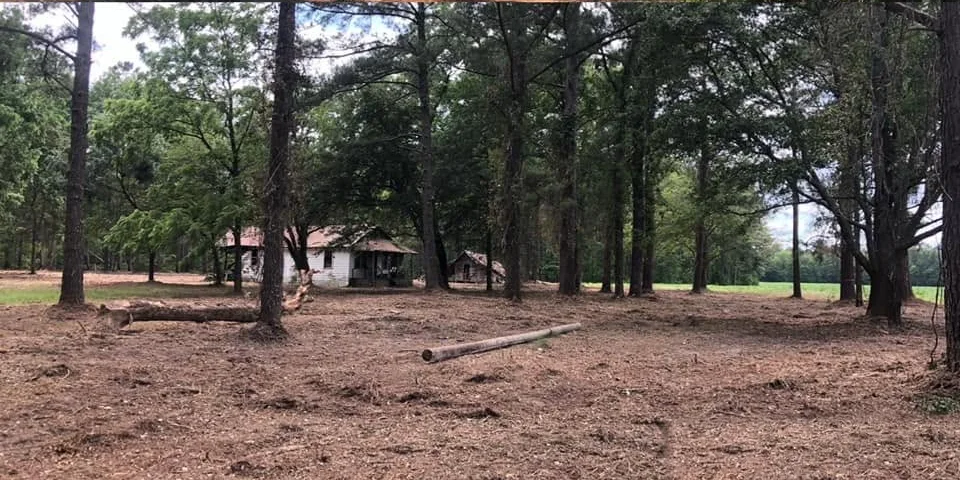 BeforeAfter
Opening up wooded land while keeping the established trees.

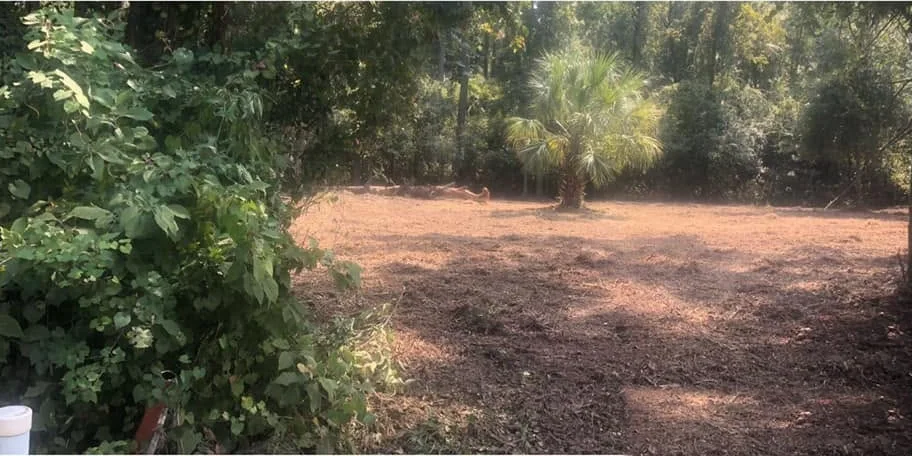 BeforeAfter
Dense overgrowth turned into usable, accessible space.
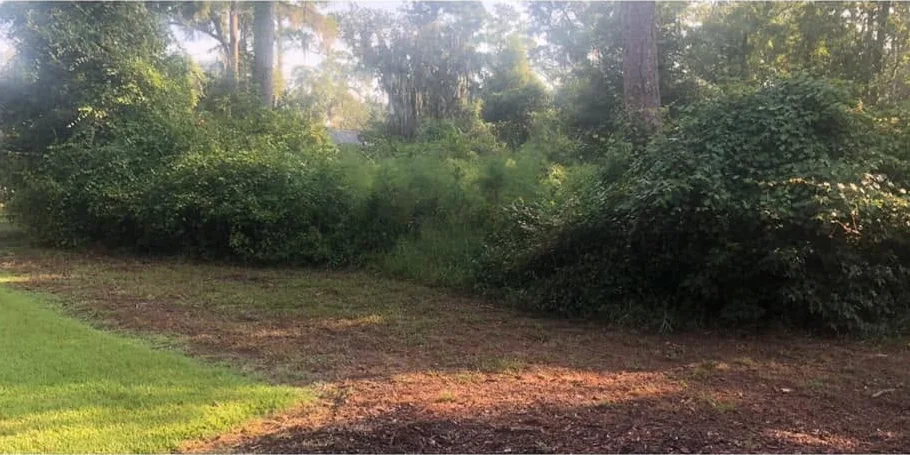
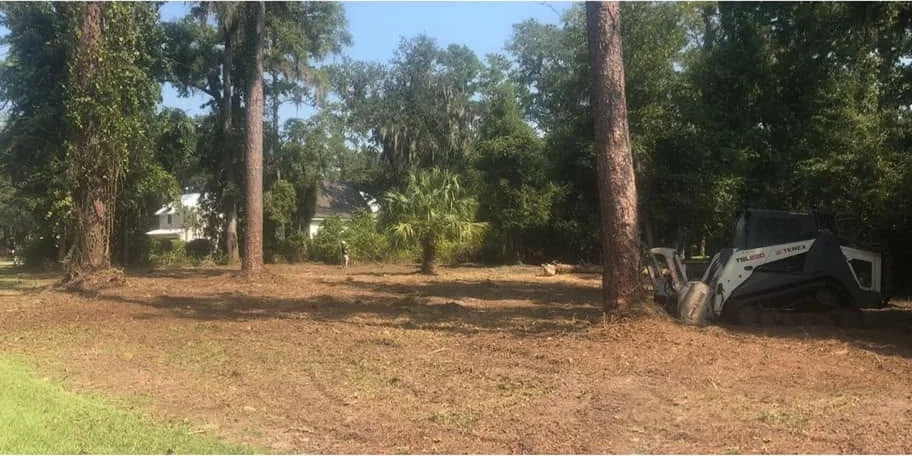 BeforeAfter
Reclaiming space beneath an established canopy.
What it clears
Mulching does its best work on the growth that closes a property in:
- Brush and thickets, including wax myrtle, yaupon and sweetgum saplings
- Vines such as smilax, muscadine, wisteria and kudzu
- Stands of Chinese privet and Chinese tallow
- Palmetto and saw palmetto in the understory (the brush and small trees under the canopy)
- Small trees, up to a size judged at the site visit
Larger trees are kept, or felled first by a logger. RRE runs two high-flow Terex tracked machines with mulching heads, and the machine for a job is chosen at the site visit. For a closer look at what the method handles and what it does not, see What can a forestry mulcher clear.
What it leaves
- A mulch layer over the cleared ground that covers the soil, slows erosion and breaks down over time
- The trees and features you chose to keep, now standing in open ground
- Stumps cut low and left in place unless you add stump grinding or stump grubbing
The finish is open, walkable ground under a layer of chips, not bare dirt. The intended finish is agreed at the site visit and written into the scope.
When to choose it vs clearing or grinding
Choose mulching when you want the ground opened but not disturbed, when you are keeping mature trees, and when you do not want piles or trucks on the property. It suits overgrown lots, understory, trails, pond edges, firebreaks and property lines.
Choose lot and land clearing when a space has to be fully cleared for use and the stumps need to come out. Choose grinding or grubbing when the stumps themselves are the problem. If the site needs soil moved, graded or stabilized, that is excavation work and an excavation contractor does it. For a side-by-side, read Forestry mulching vs bulldozing and excavation and Forestry mulching vs bush hogging.
Process
- Understand the property. We talk through the areas to improve, the access available, and the trees or features to preserve. Photos and a rough acreage help here.
- Define the work. We agree the scope, the boundaries and the intended finish before the machine arrives, including which trees stay and how the edges are handled.
- Put the plan to work. The clearing is carried out with attention to the surrounding land and the result in mind.
Frequently asked questions
How many acres can you mulch in a day?
RRE does not publish acreage-per-day figures. It varies more than most people expect: density, stem size, terrain and access all change the pace, and a privet thicket goes faster than a stand of small sweetgum. A job may be a partial day, one to two days or several days; the project quote after a site visit sets that expectation. Our guide How many acres can be cleared in a day? explains the drivers.
Will the brush grow back?
Some of it. Mulching cuts growth at the surface and leaves roots in the ground, so sprouting is expected, especially from privet, tallow and kudzu. A follow-up pass or a licensed applicator slows it. A maintenance visit, scheduled ahead or requested as needed, can be planned when we scope the job.
Do I need a permit to mulch my land?
Ordinary vegetation clearing on private rural land in South Carolina and Georgia generally does not need a state permit. Counties and towns do regulate removal of protected trees, and wetlands and buffers are regulated separately. Permits, buffers and tree-protection compliance are the landowner's responsibility. Check with your county before you start. [FPO: RRE's permit guidance and local ordinance notes — VAL-041]
Can you work on wet ground?
Soft ground and high water tables are common in the Lowcountry. Saturated soil ruts, so timing around rain and looking at access are part of the plan. We talk through ground conditions when we scope the job.