
What the service is
An invasive plant may have taken a fence line, a creek bottom or the whole understory, the brush and small trees under the canopy. The first job is to get it down to the ground so you can see what you have. That is what RRE does. The machine grinds the standing growth into a mulch layer. No burn piles, nothing hauled away.
RRE does not do chemical treatment: no spraying, injecting or painting stumps, and no selling or recommending products. That is a licensed applicator's work, and the two jobs fit together: mechanical cutback first, treatment of the regrowth after.
Before and after
Drag the handle to compare.
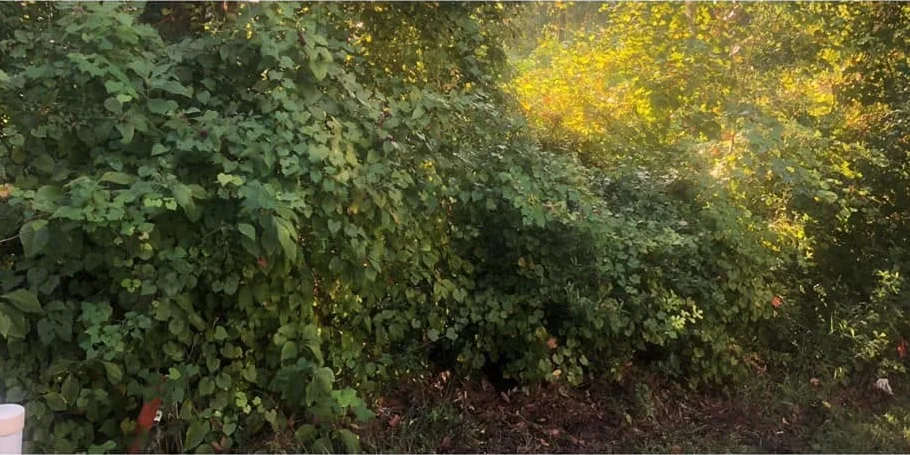
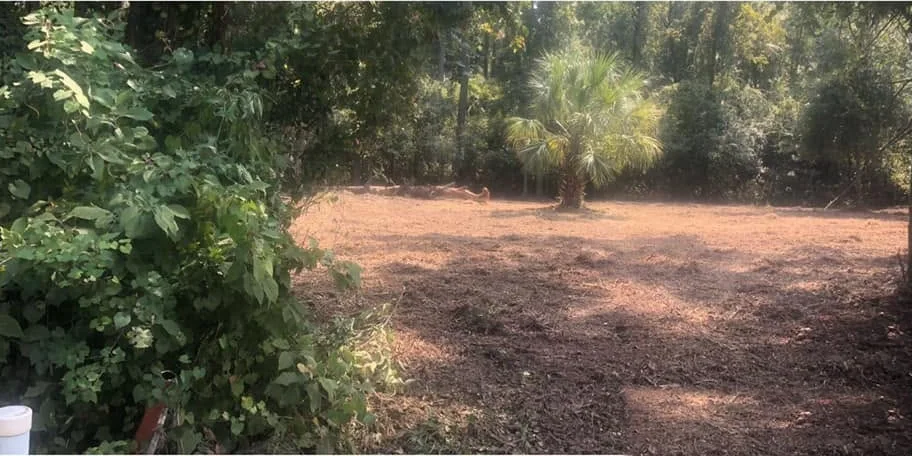 BeforeAfter
Dense overgrowth turned into usable, accessible space.
Common invaders in Georgia and South Carolina
- Chinese privet: shade-tolerant shrub that fills hardwood bottoms, fence lines and old home sites, and suckers from its roots
- Kudzu: a vine that buries field edges, road banks and timber margins and climbs into the canopy
- Chinese tallow (popcorn tree): a fast-seeding tree that takes wet ground and coastal edges
- Wisteria: a woody vine that girdles trees and pulls down limbs
- Running bamboo: spreads underground from old plantings and crosses property lines
- Japanese climbing fern and Bradford pear: increasingly common in both states
Clemson Extension and UGA Extension publish the current invasive plant lists for South Carolina and Georgia, and the Georgia Forestry Commission maintains guidance for forest land. [FPO: cite exact page + access date — SRC-011] [FPO: cite exact page + access date — SRC-012] [FPO: cite exact page + access date — SRC-010]
What mulching achieves
Three things.
- Knockback. A thicket that took years to close in comes down in a single pass. Vines are cut at the ground and go into the mulch layer.
- Access. You can walk, drive and work the area again. Fence lines, drains, trails and pond edges come back into use.
- Light. Opening the understory lets sun reach the ground, which is what native grasses and seedlings need.
The mulch layer covers the soil and slows erosion while you decide what comes next.
What it does not do
Mechanical cutting does not kill the roots. Privet resprouts from the stump and root collar. Kudzu regrows from its crowns. Bamboo pushes new canes from underground stems (rhizomes) that run well beyond the visible stand. Tallow and privet also leave seed in the soil for years.
One pass is a reset, not a cure. If nothing follows it, the same plants come back within a season or two. Plan the follow-up before the first visit.
Follow-up options
You have two routes, and many owners use both.
Repeat cutting. Each cutback drains the plant's reserves. Re-mulching on a schedule keeps the growth small and the ground usable, and over time weakens the stand. RRE does the re-mulching as maintenance visits, scheduled ahead or requested as needed and quoted by project. The timing for your species and ground is set at the site visit.
Licensed applicator. Chemical treatment of resprouts, cut stumps or new canes is the most direct way to kill the root system. It is licensed work. Ask the applicator when they want the cutting done so the regrowth is at the right stage for treatment.
A consulting forester or your county Extension agent can help you choose for your species and ground.
What past projects show
RRE's overgrowth-removal project shows the result: thick vines and brush before, an open mulched area around a retained palm after. [FPO: location, date and acreage for the overgrowth-removal photo pair — DEP-28] More project photos are on RRE's Facebook page.
Take the ground back
Send photos of what has taken over, the town or county, approximate acreage and how you want to use the area to hello@rreforestry.com, or request a consultation. We will talk through the cutback and what should follow it.
Frequently asked questions
Can you mulch kudzu?
Yes. The vines above ground go into the mulch layer and the area is open and walkable afterwards. Kudzu regrows from its root crowns, so expect follow-up cutting or treatment by a licensed applicator.
Will mulching spread bamboo or privet?
Mulching does not plant roots or underground stems. Bamboo spreads from underground stems already in the ground, privet from roots and seed. Cutting does not make either worse, and it does not stop them. Follow-up does.
Can you clear invasives along a creek or pond edge?
Up to the line the rules allow. Wetland and stream buffers are regulated separately from ordinary clearing, so confirm the boundary with your county before work starts.
Will you treat the stumps after cutting?
No. RRE's work is mechanical only. A licensed applicator treats stumps and regrowth. We can schedule the cutting around their timing.