
What "overgrown" usually means in Georgia and South Carolina
A lot left alone for five or ten years in Mid or South Georgia, the Midlands or the Lowcountry grows back in a familiar pattern. Chinese privet fills in first and shades out everything beneath it. Sweetgum and loblolly volunteers come up thick wherever there is light. Smilax, muscadine, wisteria and kudzu climb whatever is standing. On wetter Lowcountry ground, wax myrtle, yaupon and palmetto close the gaps, and Chinese tallow lines the edges.
It looks worse than it is. Nearly all of it is small-stemmed, which is exactly what a mulching head handles well. The mature oaks and pines hidden inside are usually sound. Every property has something worth keeping, and on an overgrown lot it is almost always the trees you cannot see yet.
Before and after
Drag the handle to compare.
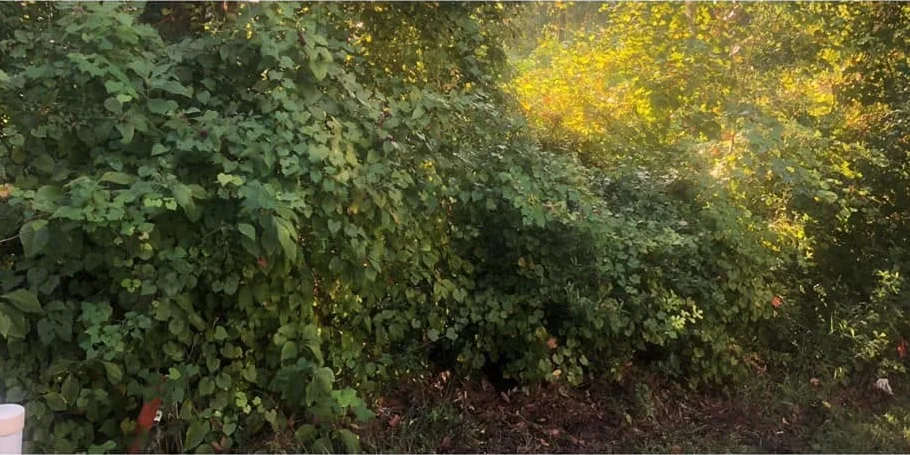
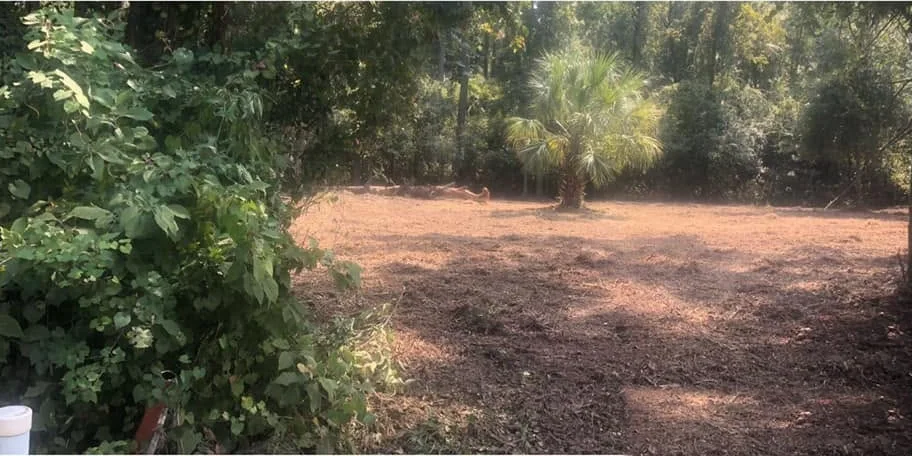 BeforeAfter
Dense overgrowth turned into usable, accessible space.
Step by step: from overgrown to usable
- Site visit. We talk through what you want from the lot: a building site, a yard, somewhere to park a trailer, a view to the road. Photos and a rough plan are enough to start the conversation; the site visit settles the rest.
- Keep list. Before any machine starts, we agree which trees and features stay, where the work area ends, and what the intended finish should look like. The keep list is flagged on the ground and written into the scope.
- Mulch. Brush, vines, saplings and small trees are ground in place and left as a mulch layer that covers the soil and slows erosion. See forestry mulching. Where the whole lot needs to come back to open ground, see lot & land clearing.
- Stumps. Mulching leaves stumps near ground level. For a surface you can mow or build on, they are ground below grade. See stump grinding.
- Access. A lane in from the road and a path to the back corner usually come out of the same visit.
- Maintenance. Cut brush comes back. A mowing routine keeps the lot open, or a maintenance visit, scheduled ahead or requested as needed, before the regrowth turns woody. Read will the brush grow back?.
What it usually will not need
An overgrown lot is a vegetation problem, not a dirt problem. If your plans call for a driveway, a building pad or a change to the ground itself, that is work for an excavation or grading contractor. It comes after the clearing. RRE does the vegetation and stump work, and will tell you when a job needs another trade.
What an opened lot looks like
Before: thick vines and brush closing in around a palm. After: an open, mulched area with the palm still standing. See the pair at overgrowth removal. [FPO: location, date and acreage of the overgrowth-removal project — DEP-28]
Frequently asked questions
How long does it take to clear an overgrown lot?
It depends on density, stem size, terrain and how easily the machine gets in. A small, lightly grown lot can be a partial day; a dense lot with stumps to grind can run several days. RRE does not publish acreage-per-day figures. The time is judged at the site visit.
Do I need a permit?
Ordinary vegetation clearing on private rural land in Georgia and South Carolina generally does not need a state permit, but counties and towns regulate removal of protected or specimen trees. Check with your county first.
Will it look like a bare lot afterwards?
No. Your keep-list trees stay and the ground is covered in a mulch layer rather than stripped bare. It reads as open woodland or a clean yard, depending on how much you keep.
What if I leave the stumps?
They sit near ground level and rot slowly. Fine for pasture or wildlife ground; for a lawn, a drive or a build, have them ground.